
Cardón refinery halted after natural gas pipeline rupture in Falcón state; no injuries reported as authorities investigate
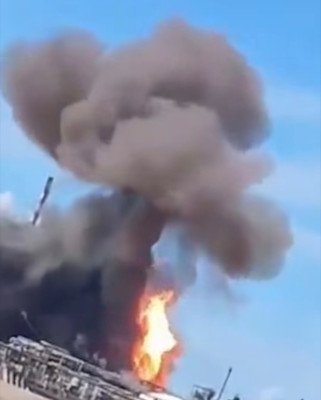
PUNTO FIJO, Venezuela, 7 October 2026: Venezuela’s second-largest oil refinery, the Cardón refinery in the northwestern state of Falcón, has been forced to suspend operations after a fire and explosions followed a rupture in a natural gas pipeline supplying the facility.
The incident occurred at approximately 3:25pm local time on Tuesday, 6 October, at the refinery in Punto Fijo, part of Venezuela’s huge Paraguaná Refining Centre. The state-owned oil company PDVSA said the fire was brought under control quickly and that there were no reported injuries, casualties or damage to third parties. An investigation into the incident is now under way.
Reuters, citing multiple sources familiar with the situation, reported that the fire began at a gas line connected to the refinery’s diesel hydrotreater area. The incident resulted in the shutdown of the entire Cardón facility, including its boilers. Personnel were evacuated as a precaution. The fire was reportedly extinguished in less than an hour.
Dramatic footage circulating on social media showed large flames and thick columns of dark smoke rising above the refinery. Reuters said it was not immediately able to independently verify the videos, although several sources and local residents reported seeing the fire and smoke from the facility.
310,000 barrels-a-day capacity
Cardón is Venezuela’s second-largest refinery, with a nominal processing capacity of approximately 310,000 barrels of crude oil per day. It forms part of the Paraguaná Refining Centre, which has a combined nameplate capacity of about 955,000 barrels per day, making it Venezuela’s largest refining complex.
However, the refinery has been operating well below its full capacity. Reuters reported that one of Cardón’s crude distillation units and its fluid catalytic cracker had already been shut down in September because of insufficient feedstock. This means the immediate loss to actual fuel production may be considerably lower than the refinery’s headline capacity of 310,000 barrels per day.
The latest shutdown nevertheless represents another setback for Venezuela’s already struggling refining sector, where ageing infrastructure, power interruptions, equipment failures and shortages of feedstock have repeatedly affected production.
Potential impact on fuel supplies
The Cardón refinery is important to Venezuela’s domestic fuel system because its operations contribute to the production of products including gasoline and diesel.
PDVSA said the country’s refining system has sufficient fuel inventories to maintain supplies, according to reporting on the company’s statement. However, a prolonged shutdown could increase pressure on Venezuela’s domestic fuel market and potentially force the country to rely more heavily on imported refined products or blending components.
Venezuela has already faced significant difficulties maintaining its refining output. Earlier Reuters reporting showed that the country’s refineries were operating at only a fraction of their combined installed capacity, despite Venezuela possessing some of the world’s largest proven oil reserves.
A wider challenge for Venezuela’s oil industry
The Cardón incident comes at a particularly important time for Venezuela’s energy industry.
Reuters reported last week that Venezuela exported around 1.08 million barrels of oil per day in September, down almost 9% from the previous month. At the same time, shipments to the United States increased to approximately 629,000 barrels per day, while exports to India and Europe declined.
The country has also been attempting to attract new investment and international expertise to revive its oil and gas sector. Major international energy companies have recently announced agreements involving Venezuelan oil and gas projects, while concerns remain about the country’s ageing infrastructure and unreliable electricity supply.
The refinery fire therefore highlights a central challenge facing Venezuela: having substantial oil resources does not automatically translate into reliable fuel production. Refineries require functioning pipelines, electricity, maintenance, spare parts and a steady supply of crude and other feedstocks.
Investigation continues
PDVSA has said that the fire was caused by a rupture in the natural gas line feeding the refinery’s boilers and that emergency personnel responded rapidly. The company reported no injuries or major damage and said the incident would be investigated.
As of Wednesday, 7 October, no definitive timetable had been announced for the full resumption of Cardón’s operations. The extent of any damage to individual processing units will be an important factor in determining how quickly the refinery can return to service.
For Venezuela, the immediate priority will be to establish the cause of the pipeline rupture, assess the condition of the refinery’s equipment and restore operations without compromising worker safety.
The incident is also likely to attract close attention from international energy markets. While the refinery’s actual output has been significantly below its 310,000-barrel-per-day nameplate capacity, any prolonged disruption could further strain Venezuela’s domestic fuel supply and complicate the country’s broader efforts to rebuild its oil-refining infrastructure.
Sources: Reuters, Al Jazeera, PDVSA statements and Venezuelan local reporting.
 আইটি ল্যাব সলিউশন্স লি.