
Residents across the UK to gain an extra hour as the country switches to Greenwich Mean Time

প্রকাশ: ২৪ অক্টোবর ২০২৬ ১২:৪২
BIRMINGHAM, UK | 24 October 2026
Residents across the UK to gain an extra hour as the country switches to Greenwich Mean Time
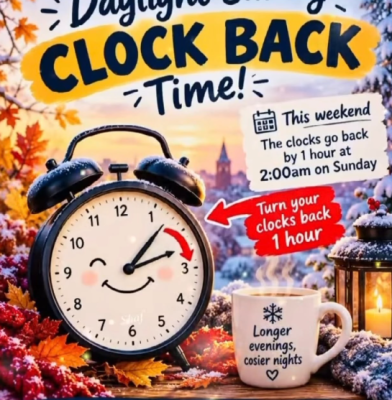
People across the United Kingdom are preparing to turn their clocks back by one hour this weekend as British Summer Time (BST) comes to an end and the country returns to Greenwich Mean Time (GMT).
The clock change will take place in the early hours of Sunday, 25 October 2026. At 2am, clocks will move back to 1am, giving people an additional hour in the day. The change also marks the transition towards the winter season, when evenings become darker earlier.
The annual adjustment is part of the UK’s long-established daylight-saving system, under which clocks move forward by one hour in spring and return to standard time in autumn.
What Residents Need to Know
People are advised to check household clocks, watches, car dashboards, heating systems and other appliances that may not update automatically. Most internet-connected smartphones, tablets and computers should adjust their time settings automatically, provided automatic time updates are enabled.
The time change can be particularly important for people working overnight shifts, travelling early on Sunday morning or relying on scheduled transport services. Anyone with appointments or journeys planned should check the relevant times to avoid confusion.
For workers whose shifts overlap with the clock change, the repeated hour may also affect working hours. Employees should consult their employment contracts and speak to their employers if they are unsure how the change affects their shifts or pay.
Why Do the Clocks Change?
The system is intended to make better use of available daylight throughout the year. During British Summer Time, clocks are advanced by one hour to provide more daylight during the evening. In autumn, the clocks return to GMT, shifting an hour of daylight back towards the morning.
The practice has a history stretching back more than a century. British Summer Time was introduced in 1916, during the First World War, when conserving fuel and making more effective use of daylight were important considerations.
Since then, the UK has generally followed the pattern of moving clocks forward on the last Sunday in March and back on the last Sunday in October.
Benefits and Ongoing Debate
For many people, the autumn clock change brings the welcome prospect of an extra hour in bed. It can also provide additional daylight during the early morning, which may benefit commuters, schoolchildren and people who begin work early.
However, the adjustment also means that sunset occurs earlier according to the clock, making late afternoons and evenings noticeably darker. This can affect commuting routines, outdoor activities and road safety, particularly for pedestrians and cyclists.
The twice-yearly clock change remains a subject of public discussion. Supporters of the current arrangement point to the benefits of additional evening daylight during spring and summer, while critics raise concerns about disrupted sleep patterns, darker winter evenings and the inconvenience of changing clocks twice a year.
Despite continuing debate, the UK retains its existing arrangements, with no announced change to the established system.
Preparing for the Winter Months
As the country moves into the colder months, residents are encouraged to use the weekend as an opportunity to check their household routines and prepare for shorter daylight hours. Checking outdoor lighting, reviewing morning travel arrangements and allowing sufficient time for journeys can help people adjust to the seasonal change.
The next clock change will take place in spring 2027, when clocks are scheduled to move forward by one hour on Sunday, 28 March, marking the return of British Summer Time.
For now, the message is simple: remember to turn back any clocks that do not update automatically and enjoy the extra hour as the UK moves into winter.
Sources: UK Government, When do the clocks change?; Royal Observatory Greenwich, When do the clocks go back in 2026.
News in English থেকে আরো পড়ুন