
প্রকাশ: ১৫ অক্টোবর ২০২৬ ১৬:৫৮
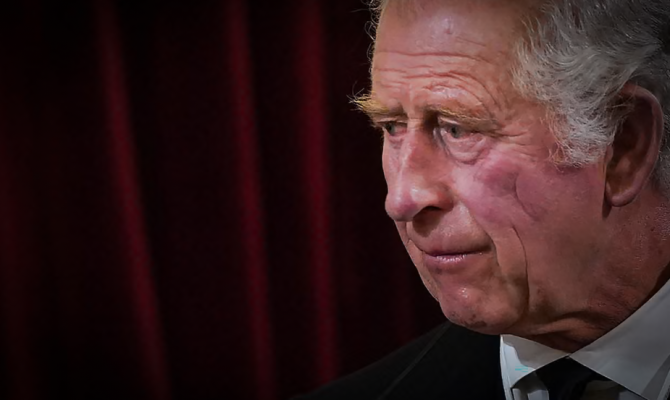
King Charles III has long championed religious tolerance, interfaith dialogue and mutual understanding, emphasising the importance of building bridges between communities of different faiths in an increasingly diverse society.
The King’s longstanding commitment to interfaith relations has attracted renewed attention amid continuing discussions about religious prejudice, extremism and the importance of peaceful coexistence in Britain.
A social media post circulating online attributes the following statement to the monarch: “We must embrace the sacred teaching of Islam. It teaches compassion and unity for all.” However, the exact quotation could not be independently verified against an authoritative royal statement. It should therefore not be published as a confirmed direct quotation from the King.
Nevertheless, the central themes of religious understanding and respect for Islam are consistent with views King Charles expressed publicly before his accession to the throne.
A longstanding commitment to understanding Islam
In November 2017, when he was Prince of Wales, Charles delivered a major address entitled Islam and the West at the Oxford Centre for Islamic Studies.
In the speech, he highlighted the dangers of misunderstanding between the Islamic and Western worlds and argued that greater knowledge of one another was essential for peaceful coexistence.
“I believe wholeheartedly that the links between these two worlds matter more today than ever before,” he said, referring to the relationship between Islam and the West.
He also highlighted shared values among Islam, Christianity and Judaism, including compassion for disadvantaged people, respect for knowledge, justice and the importance of family life.
The address demonstrated his belief that differences in religious traditions should not become barriers to cooperation. Instead, he called for dialogue, tolerance and a deeper appreciation of the contributions different cultures have made to civilisation.
The official Royal Family website records his longstanding work to promote understanding between religious communities.
Distinguishing faith from extremism
One of the important themes in the King’s earlier public statements has been the need to distinguish the beliefs of ordinary Muslims from the actions of individuals who commit violence in the name of religion.
Following the terrorist attacks in London in July 2005, Charles, then Prince of Wales, wrote that terrorism should not be used as a reason to blame Islam as a whole.
He argued that violent extremism represented a distortion of traditional Islamic teachings rather than an accurate reflection of the faith.
This distinction remains important in public debate. Violent extremism must be addressed through appropriate law enforcement, prevention and community cooperation, while Muslim communities should not be collectively held responsible for the actions of extremists.
Religious identity alone is not an indicator of support for violence. Fair and responsible public discussion requires evidence, accurate reporting and an understanding of the diversity within religious communities.
Britain’s multicultural society
Britain is home to communities with different religious beliefs, cultural traditions and backgrounds. Muslim communities have contributed to the country’s public services, education, healthcare, business, arts and cultural life for generations.
King Charles has repeatedly spoken about the importance of protecting religious diversity and enabling people of different faiths to live together with mutual respect.
Following his accession, he described Britain as a “community of communities” and emphasised the monarch’s responsibility to protect the country’s diversity, including the freedom to practise religion.
Such principles are particularly relevant when communities face tension, prejudice or hostility. Building trust requires more than public statements. It also depends on education, constructive dialogue, responsible leadership and meaningful cooperation between people of different backgrounds.
Promoting interfaith cooperation
The King’s commitment to dialogue has continued during his reign.
On 11 February 2025, senior Muslim and Jewish leaders presented him with the Drumlanrig Accord at Buckingham Palace following its signing. The agreement established a framework for sustained Muslim-Jewish cooperation, reconciliation and mutual understanding.
The initiative reflected the importance of bringing religious leaders together to address division and strengthen relationships between communities.
King Charles’s approach to interfaith relations has consistently emphasised the value of understanding different beliefs while recognising the principles that people share.
A message of unity, not division
At a time when misinformation can spread rapidly through social media, the distinction between an authentic royal statement and an unverified online quotation is especially important.
The viral image attributing a specific declaration about Islam to King Charles should not be treated as an official statement without confirmation from a reliable source.
However, the King’s documented speeches and public engagements provide substantial evidence of his support for religious tolerance, interfaith understanding and peaceful coexistence.
The wider message is relevant to Britain’s future: communities are stronger when people reject prejudice, challenge extremism and work together to protect the dignity and rights of others.
Religious faith can be a source of compassion, service and solidarity. No single community should be judged by the actions of a few, and differences in belief need not prevent people from working towards common goals.
King Charles’s longstanding advocacy of interfaith dialogue offers an important reminder that mutual respect, understanding and cooperation are essential foundations of a peaceful and inclusive society.
Sources: The Royal Family, The King and Faith; The Royal Family, Islam and the West, address delivered at the Oxford Centre for Islamic Studies, 13 November 2017; UK Government, Historic interfaith peace accord presented to The King, 12 February 2025.
News in English থেকে আরো পড়ুন
এ সম্পর্কিত আরো পড়ুন